Dave shares his experience with a setback and having a treatment that improved his symptoms.
Ten Years After the First Box: What Prescriptions Did to My Life
In 2015, I went to see my GP about stress. He put me on benzodiazepines: four times a day, for life. That was the word he used — for life. Nobody explained to me what that molecule does to the nervous system when you take it long-term, or what it costs to come off it. I found out about both in my own body.
I came off it alone. Three years of micro-tapering, worked out by myself, without a shred of medical support, with side effects of a violence I never managed to make anyone understand. And throughout those three years, I kept working full-time.
That was the state I was in when I checked into a psychiatric clinic. I went there for help finishing my taper. What they did was the opposite: they added up to six medications on top of an already raw nervous system — then, after six weeks, cut everything at once. That is where my nervous system was fried. I have never gone back to the state I was in when I walked through that door.
If you’re tapering and you’re reading this: that is exactly the scenario to watch out for. Adding psychotropic drugs to an already destabilised system, then withdrawing them abruptly, is a second withdrawal stacked on top of the first.
I held on anyway. Six years without a single dose. And I had rebuilt something: I had become an athlete again, I had a body that responded. I say this because what follows shows exactly what was taken from me.
The Drops
Then came the drops. Ear drops containing a fluoroquinolone. An ordinary little bottle, for an ordinary little complaint.
Within days, everything collapsed: diffuse pain, tendons and connective tissue damaged, autonomic nervous system dysregulated, permanent neurological buzzing, a crash after the slightest exertion. This is what’s known as FQAD, fluoroquinolone-associated disability. It is not a passing side effect, it is lasting damage. And a nervous system already injured by benzodiazepines is ground on which it hits twice as hard.
I nearly didn’t make it. I weigh my words. A year later, picking up antiseptic at the pharmacy, I told the pharmacist his drops had almost killed me. He replied that this “isn’t something we see very often.”
The Year I Disappeared
I need to describe what that year actually was, because otherwise the phrase “side effect” makes it sound like an inconvenience.
I spent that year lying down. Not tired: lying down. A body burning from the inside, tendons giving way, muscle pain that never stops, permanent neurological buzzing — day and night, without a single hour’s respite. The slightest effort triggered a crash that lasted days. Getting up to go to the bathroom was a calculation. A ten-minute conversation was paid for the next day.
And on top of the pain, the isolation. Nobody understands. The doctors don’t understand, the people close to you eventually run out of things to say, and you spend your days alone with a body putting you through the unimaginable while the world carries on outside. I had been an athlete. I had a job, a career, a family, possessions. All of it disappeared while I was in that bed.
I’m going to say this plainly, because this blog is read by people who may be exactly where I was: I reached the point of preparing my exit. Not in a passing moment of despair — coldly, as the only way out left to someone whose suffering never stopped and whom nobody believed. I had thought it through. I had started making arrangements.
I didn’t do it. And if one sentence survives from this paragraph, let it be this one: at that moment, I was absolutely certain nothing would ever improve. I was wrong. The improvement came, later, by a route I could not see from that bed. That certainty that everything is over is a symptom of the state you’re in — not reliable information about your future.
If you’re there today: talk to someone before you decide anything. I’m still here, and I’m writing.
Three Hospital Stays, and the Escape
I was hospitalised three times. Three times with no result. The problem was not a lack of resources: it was the refusal to consider the cause. Everything I was going through was the iatrogenic consequence of two prescriptions. Not one of the doctors who saw me accepted that reading. A patient who says the drugs are what destroyed him becomes, in that setting, a patient who is delusional.
The last time, the threat was explicit: involuntary committal. I left the hospital under my own power, in the state I was in, because staying meant being locked up for telling the truth.
The People Who Carried It With Me
An iatrogenic illness doesn’t destroy one person. It takes the whole circle around them.
My partner spent her weekends sitting beside me, without a word. Not out of coldness: because my brain was so damaged that I could no longer bear anyone speaking in front of me. A human voice was an assault. So she stayed there, in silence, for hours. She cooked for me, she did my shopping. She came to the hospital to support me — and that is where she saw, with her own eyes, the dishonesty of the doctors towards me. She is one of the few witnesses to what I’m writing here.
My son lost his job through sheer worry. He called me every day. Not to check in: to check I was still alive. No son should have to dial a number every morning wondering whether his father will pick up.
My mother came to clean my flat, and left telling me to go and get treatment. She understands nothing about how the system works — for her, when you’re ill you see a doctor and the doctor makes you better. She has never been able to accept that they were the ones who nearly killed me. That isn’t her fault. It is simply inconceivable to someone raised with that kind of trust.
That is part of the violence of this situation too: you aren’t only destroyed yourself, you drag down with you the three or four people who refuse to let go of you.
Doing the Research Myself
From then on, I stopped waiting to be rescued. I searched. Months of it: hours of conversation with an AI to understand the mechanisms — mitochondria, collagen, mast cells, histamine — nights spent reading, combing through the groups and networks where floxed people around the world document what official medicine does not.
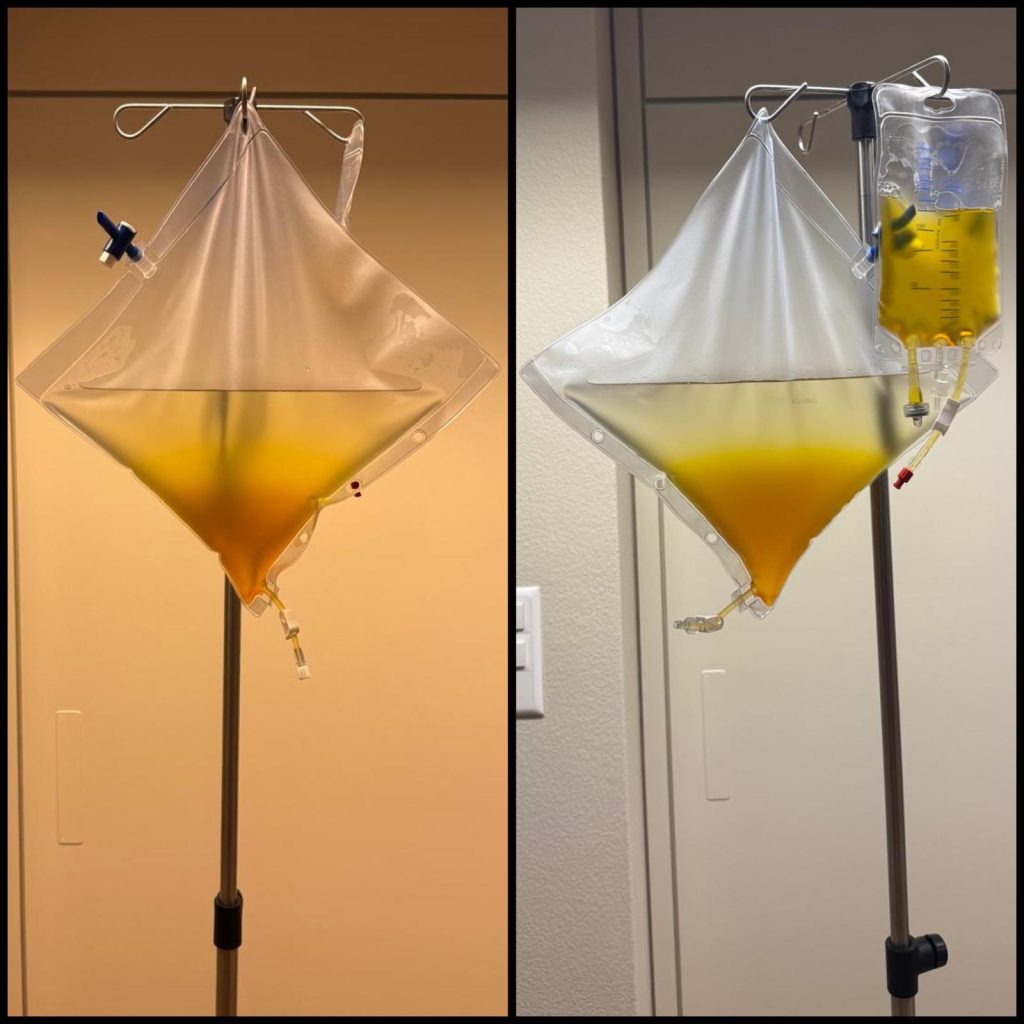
That is where, and nowhere else, I found a serious lead: INUSpheresis, a therapeutic apheresis that filters the blood to remove toxins and inflammatory complexes. It is the only treatment that has brought me real improvement. I’m not claiming it works for everyone — I’m saying what worked on me, after everything else had failed.
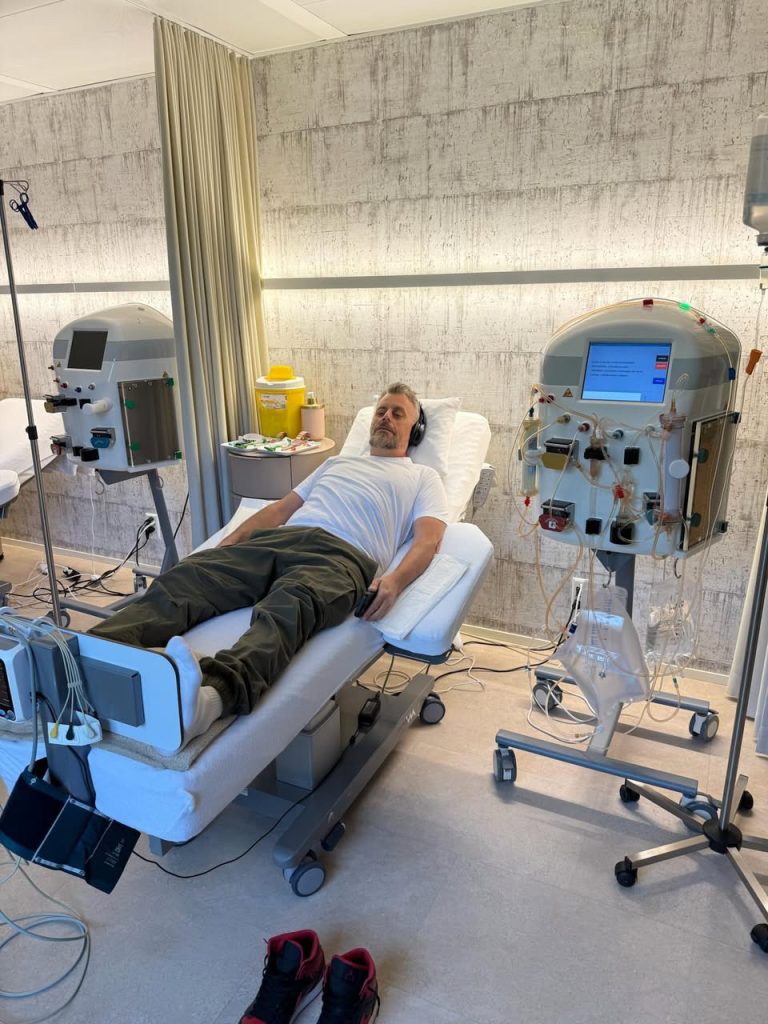
The university hospital refused to cover it. I paid out of my own pocket.
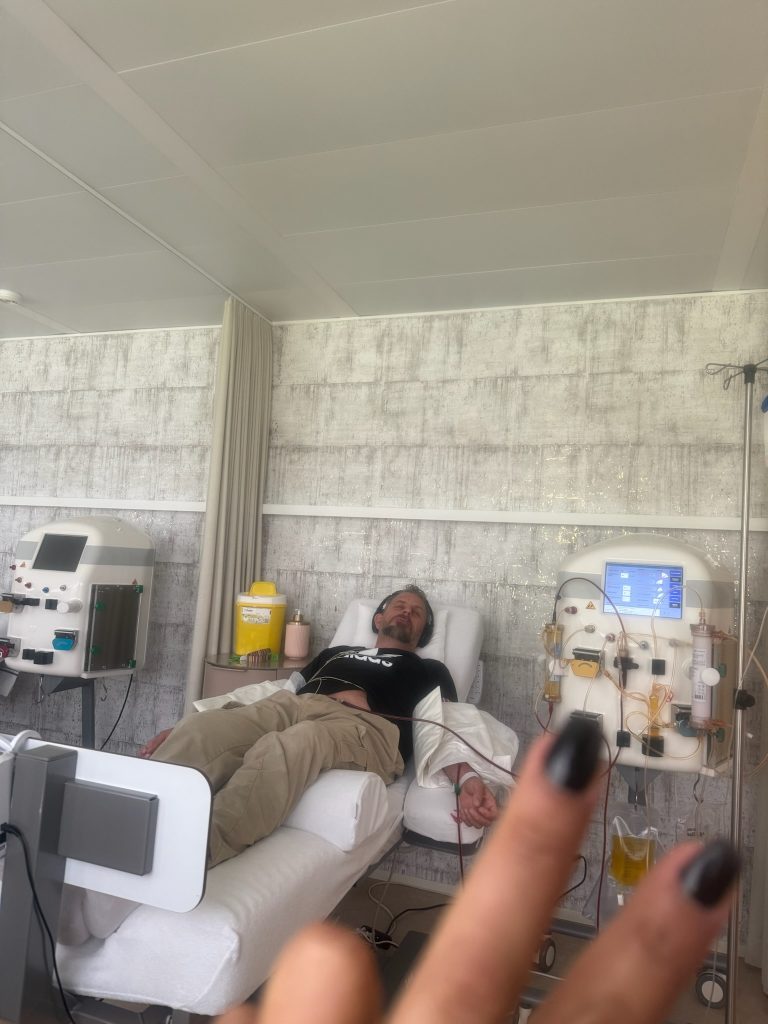
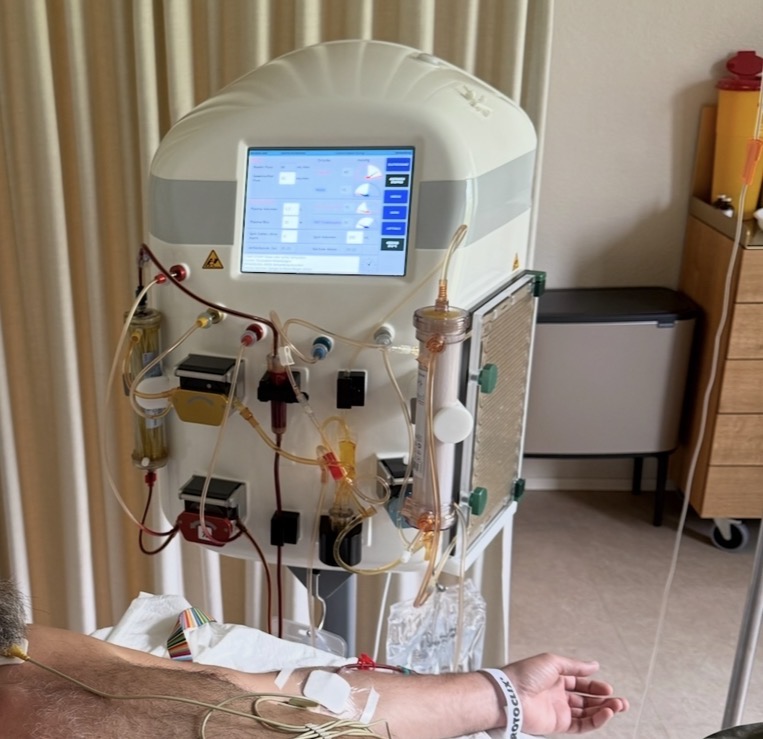
And I was only able to do that for one reason: I had won my case against disability insurance. After years of fighting, they had to recognise my disability and grant me a full pension — but they misrepresented the grounds. The decision acknowledges the extent of the damage and lies about its origin. They grant me the disability and deny me the cause. The same logic as at the hospital, with an extra form.
Put another way: I paid for the repair of an injury nobody was willing to name.
Where I Am Now
Better than a year ago. Not cured: better.
The most concrete measure I can give is this one: this summer, I drove from Lausanne to Kotor in a van. Three thousand kilometres, through Italy, Croatia, Montenegro. Stages capped at four hours, rest days built in, some very hard days — but I did it. A year ago, I was in a bed preparing my exit.
That doesn’t mean it’s over. I live with daily pain, constant buzzing, a crash whenever I go past a threshold I have to calculate at every moment. I lost my job, my career, my family, my possessions, my health. Four operations. A litre of cerebrospinal fluid drained, in two goes.
And to this day, nobody has apologised.
But I spent three weeks on the road, and I came back. That is what I have to say to anyone who is today where I was last year.
Dave.
Thank you Dave for sharing about your experience and it is interesting to hear about this treatment, I understand like you said its not available to everyone due to costs, which is just such a shame, as it sound like it has helped you, and people in withdrawal need all the help they can get.
Sharing this as I feel it’s important to share things that have helped people.
With love
Emma